Problem Solving Strategies
Related Topics:
More Lessons for Arithmetic
Math Worksheets
The following are some examples of problem solving strategies.
Explore it//Act it/Try it (EAT) method (Basic)
Explore it//Act it/Try it (EAT) method (Intermediate
Explore it//Act it/Try it (EAT) method (Advanced)
Finding a Pattern (Basic)
Finding a Pattern (Intermediate)
Finding a Pattern (Advanced)
Explore It/Act It/Try It (EAT) Method (Basic)
In this lesson, we will look at some basic examples of the Explore it//Act it/Try it (EAT) method of problem solving strategy.
Example:
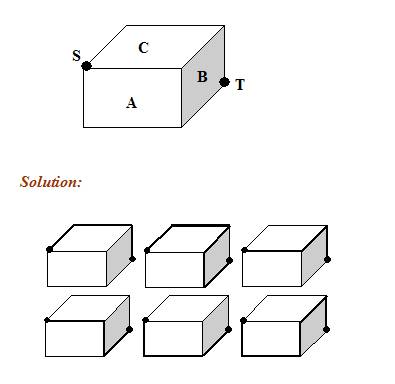
A plumber has to connect a pipe from a storage tank at the corner, S, of the roof to a tap at the diagonally opposite corner, T, in the figure below. Find the number of paths for the pipe if the pipe can only run along the edges of walls A, B, or roof C.
Example:
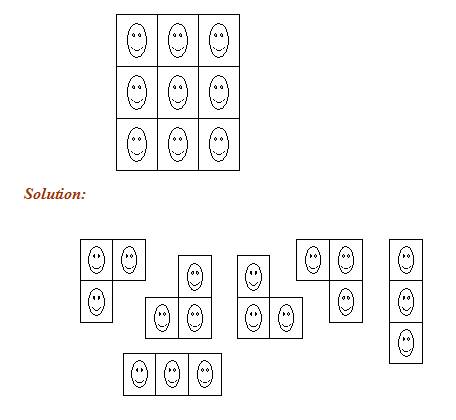
Three stamps are to be torn from a sheet of nine stamps as shown below. The three stamps must be intact so that each stamp is joined to another stamp along at least one edge. Find the possible patterns for these three stamps.
Example:
Rachel has to spend exactly $100 on the following gifts. What are the combinations of gifts that she can buy?

Solution:
B, E, F or B, D
Example:
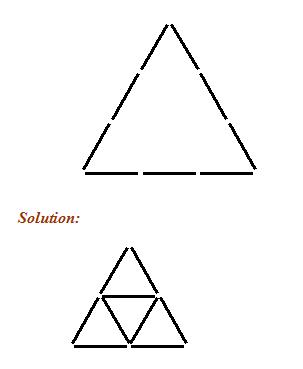
The figure below shows 9 matchsticks arranged as an equilateral triangle. Rearrange exactly 5 of the matchsticks to form 5 equilateral triangles, without leaving any stray matchsticks.
Example:
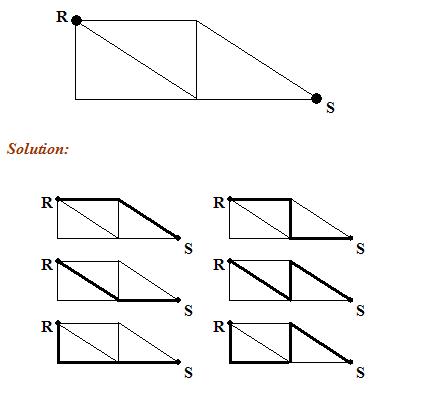
The figure below shows the roads linking cities R and S. What are the different routes to travel from R to S?
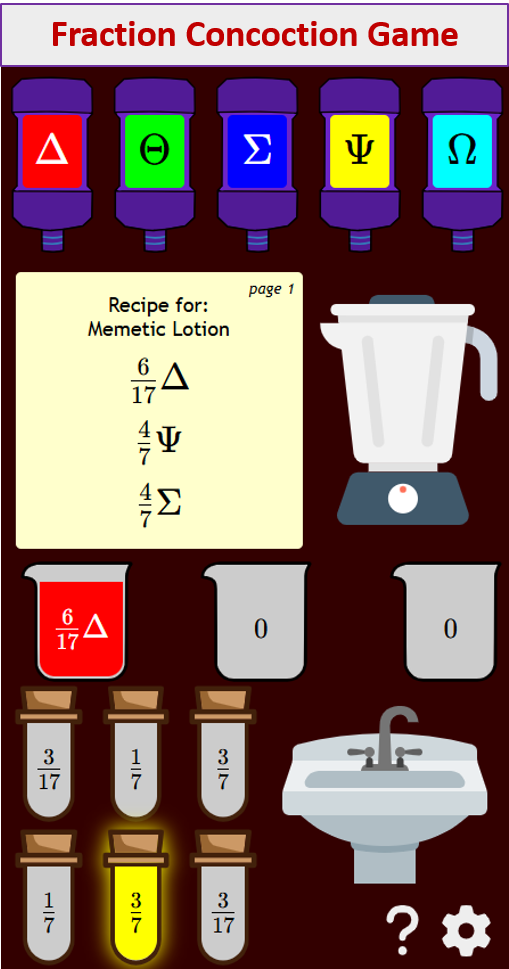
Try out our new and fun Fraction Concoction Game.
Add and subtract fractions to make exciting fraction concoctions following a recipe. There are four levels of difficulty: Easy, medium, hard and insane. Practice the basics of fraction addition and subtraction or challenge yourself with the insane level.
We welcome your feedback, comments and questions about this site or page. Please submit your feedback or enquiries via our Feedback page.