

Math Statistics: Mode, Median, Mean and Range
Related Topics:
More Statistics Lessons
Statistics Games
Statistics Worksheets
Mode is the most common value among the given observations. For example, a person who sells ice creams might want to know which flavor is the most popular.
Median is the middle value, dividing the number of data into 2 halves. In other words, 50% of the observations is below the median and 50% of the observations is above the median.
Mean is the average of all the values. For example, a teacher may want to know the average marks of a test in his class.
Range tells how far apart the greatest and least numbers in a set are. It is the difference between the largest and smallest numbers.
Range
The range of a set of numbers is the difference between the least number and the greatest number in the set.
Example:
Find the range:
a) 150, 250, 825, 400, 18, 500
b) 2.2, 1.8, 5.1, 0.3
Solution:
a) The largest value is 825. The smallest value is 18
Range = largest value − smallest value = 825 − 18 = 807
b) The largest value is 5.1. The smallest value is 0.3
Range = largest value − smallest value = 5.1 − 0.3 = 4.8
Finding the range and mid-range
The range is the difference between the largest and smallest numbers. The midrange is the average of the largest and smallest number. Practice with this problem.
These are ways to measure the Central Tendency
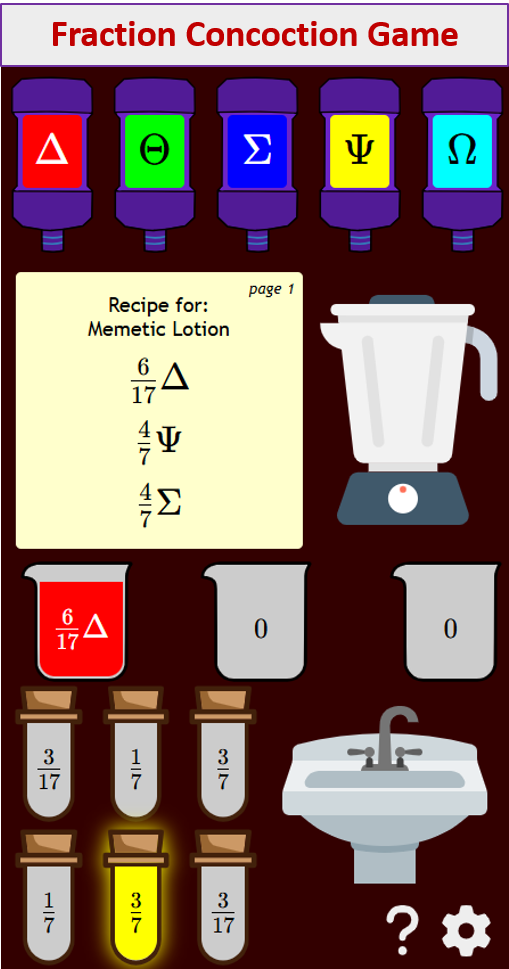
Try out our new and fun Fraction Concoction Game.
Add and subtract fractions to make exciting fraction concoctions following a recipe. There are four levels of difficulty: Easy, medium, hard and insane. Practice the basics of fraction addition and subtraction or challenge yourself with the insane level.
We welcome your feedback, comments and questions about this site or page. Please submit your feedback or enquiries via our Feedback page.