Present Perfect Tense
In these lessons, we will learn how to form the present perfect tense, when to use the present perfect tense, differences between simple past tense and present perfect tense, forming the negative and questions in the present perfect tense.
Related Pages
Present Continuous Tense
Simple Past Tense
Past Participle
IELTS, TOEFL And English As A Second Language
More Lessons On English Grammar
Verbs have different forms, called tenses. The tense of a verb tells us when the action happens.
Forming the Present Perfect
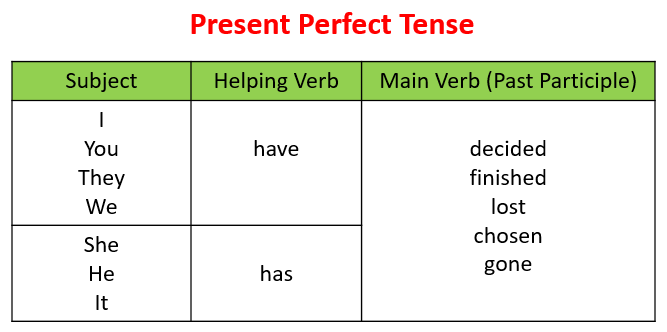
The present perfect consists of two verbs: helping verb (have/has) and main verb (past participle).
The following table shows some examples of the present perfect tense.
When to use the Present Perfect Tense
Situation 1: The present perfect tense connects the past with the present. It states that something began in the past and it continues to the present. We usually use for or since in the sentence.
Examples:
She has been in her room since this morning.
It has rained for days.
I have known Tina since high school.
Situation 2: The present perfect is used to express an unfinished period of time. The action likely happened repeatedly in the past, and the present perfect suggests that the action may happen again in the future.
Examples:
I have taken three tests this semester.
The hens have laid plenty of eggs.
John has gone out again.
Situation 3: The present perfect can be used to talk about experience from the past without giving the specific times that it happened
Examples:
We have seen this movie already.
I have lost my wallet.
There has been an accident.
Situation 4: We use the present perfect tense to report events that happened in the recent past. The effect(s) of the recent event is still felt or seen in the present.
Examples:
I have made you a cup of tea.
He has cut his finger.
Differences between the simple past tense and the present perfect tense
- In the present perfect tense the period of time is unfinished and may continue to the future. In the simple past tense the period of time is already over (or closed)
Examples:
I have taken three tests this semester.
(Present perfect tense – I may have more tests this semester)
I took four tests last semester.
(Past Tense because the last semester is already over)
- The present perfect can express general past whereas the simple perfect can express a specific past.
Examples:
We have seen this movie already. (General past)
We saw this movie yesterday. (Specific past – yesterday)
Forming Questions
Yes/ No questions
Have/Has + subject + past participle ….?
Examples:
Has Simon come home yet?
Have you ever been to London?
Information Questions
Question word + has/have + subject + past participle?
Examples:
Where has the thief hidden the jewels?
Who have you spoken with?
Videos
The present perfect and the present perfect progressive tenses. This is part one of a lesson in four parts. In part one, we practice forming the present perfect tense, and Jennifer begins to explain why this tense is used.
This is part two of a lesson in four parts. In part two, we continue to look at reasons why the present perfect is used. A contrast is made between the present perfect and the simple past.
This is part three of a lesson in four parts. In part three we practice forming the negative and questions in the present perfect tense. Reasons for using the present perfect are reviewed.
This is part four of a lesson in four parts. In part four, we practice using time expressions and finally begin our study of the present perfect progressive. There is additional material will compare and contrast several verb tenses including the present perfect and the present perfect progressive.
This additional material compares and contrast several verb tenses including the present perfect and the present perfect progressive.
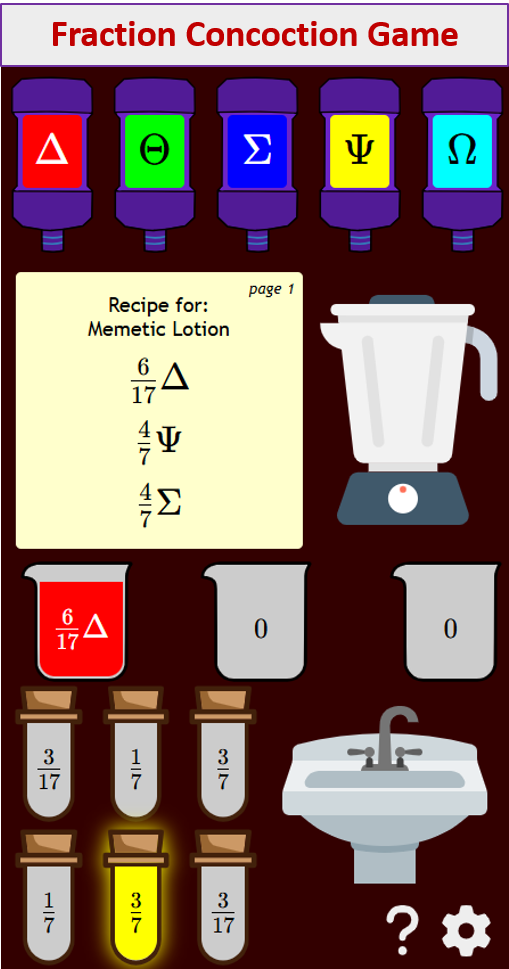
Try out our new and fun Fraction Concoction Game.
Add and subtract fractions to make exciting fraction concoctions following a recipe. There are four levels of difficulty: Easy, medium, hard and insane. Practice the basics of fraction addition and subtraction or challenge yourself with the insane level.
We welcome your feedback, comments and questions about this site or page. Please submit your feedback or enquiries via our Feedback page.