Number Bond Garden Game
Related Topics:
Math Games
Math Worksheets
Number Bond Garden is a free Number Bond Game to help Kindergarten and First Grade students learn to find the number pairs that adds to 10. The Number bonds to 10 game turns abstract addition and subtraction into concrete, visual, and mentally manageable tasks, helping learners solve harder math problems later on.
How to play Number Bond Garden?
Your goal is to clear the board.
- Select a free orb, then select another free orb, such that their numbers add up to ten, to remove both orbs from the board.
- An orb is free only if it has three empty spaces next to it. Luckily, spaces off the board count as empty spaces.
- The “Help” button will show this clearly.
The possible matches are:
1 + 9, 2 + 8, 3 + 7, 4 + 6, 5 + 5.
The 10 orb is special and can be removed once it is free.
Click on a free orb to start playing!
Dim Blocked
On: Dim the orbs that not free, so that you can concentrate on the ones that are free.
Off: All orbs are not dimmed.
Made a mistake
If you made a mistake you can use the undo button.
Difficulty Levels
There are two difficulty levels:
- Easy: A board with 37 orbs.
- Hard: A bigger board with 55 orbs.
Strategies for this game
- If you can eliminate a number (and its counterpart) from the board without removing other orbs, it’s always safe to do so (it can’t make a winnable state unwinnable). If you have to remove a few other orbs to do so, it’s still often worthwhile, as it can often free several other orbs.
- Try to create islands of free orbs, and then keep them around to be used only as a last resort.
- Try to identify potential troublesome spots ahead of time. E.g. if you have several 3’s that are surrounded by 7’s, you’ll need a plan to match one or more of those 7’s with a 3 outside of the blockage.
Why learn number bonds to 10?
Number bonds to 10 are extremely useful and are considered a foundational pillar of early mathematics education. They represent the essential pairs of numbers that add up to ten (0+10, 1+9, 2+8, 3+7, 4+6, 5+5) and their mastery is key to developing mental math fluency, confidence, and number sense in young learners.
-
Foundation for Mental Arithmetic
Mental Math Speed: Instant recall of number bonds allows children to solve calculations quickly without relying on counting on their fingers.
Bridge to 10 Strategy or “Making Ten” Strategy: They are essential for addition and subtraction that crosses the ten barrier. For example, to calculate 8 + 5, a child who knows that 8 + 2 = 10 can break 5 into 2 and 3, making the calculation (8 + 2) + 3 = 13. -
Conceptual Understanding
Part-Part-Whole Relationships: Number bonds visually show that a single number (the whole) is made up of smaller parts, facilitating a deeper understanding of number composition and decomposition.
Inverse Operations: Number bonds teach addition and subtraction simultaneously (e.g., if 4+6=10, then 10-4=6).
Commutativity: They demonstrate that the order of the numbers does not affect the sum (3+7 is the same as 7+3). -
Stepping Stone to Complex Math
Foundation for Larger Numbers: Knowing number bonds to 10 makes learning number bonds to 20, 50, and 100 significantly easier.
Pattern Recognition: They allow children to spot patterns. If they know 3 + 7 = 10, they can easily understand 30 + 70 = 100. -
Practical Application
Real-World Connections: Number bonds are easily demonstrated using everyday items like fingers, toes, pennies in a dime, or ten-frame manipulatives.
Games-Based Learning: Because there are only five main pairs, they are easily reinforced through games like the Number Bond Garden, making them engaging rather than purely academic.
| Popular Puzzle Games | ||
|---|---|---|
 Minesweeper |
 Sudoku |
 Slitherlink |
 Ken Ken |
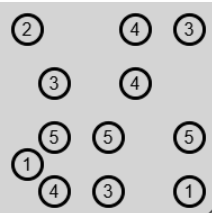 Bridges(Hashi) |
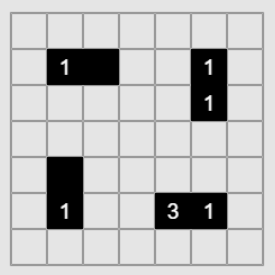 Light Up (Akari) |
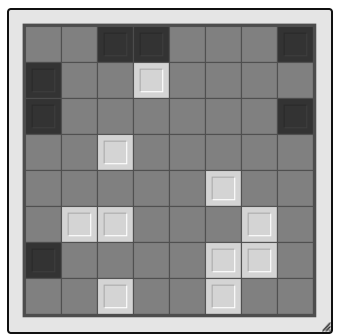 Binary (Takuzu) |
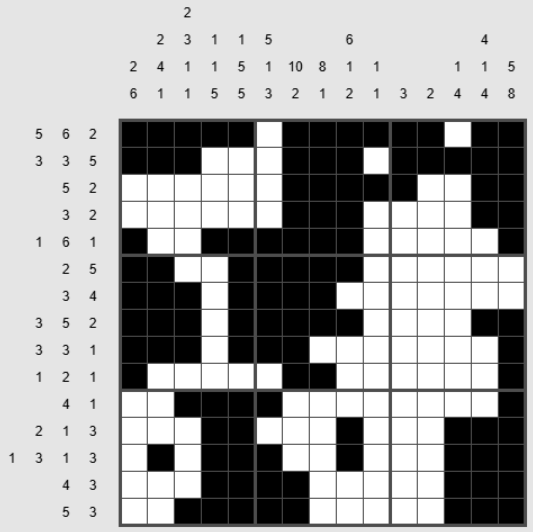 Nonogram (Patterns) |
 Skyscrappers (Towers) |
| Check out our most popular games! | ||
|---|---|---|
 Fraction Concoction |
 Fact Family Game |
 Number Bond Garden |
 Online Addition Subtraction Game |
 Penguin Solitaire |
 Sawayama Solitaire |
 Ark Solitaire |
 Eldritch Invasion |
 Shenzhen Solitaire |
Check out more Solitaire games here.
We welcome your feedback, comments and questions about this site or page. Please submit your feedback or enquiries via our Feedback page.