

Operations on Inequalities
Related Topics:
More Lessons for Algebra
Math Worksheets
When we add or subtract the same number from both sides of an inequality, the inequality sign remains unchanged.
Example:
Find the new inequality when:a) 3 is added to both sides of 4 < 10
b) 4 is subtracted from 7 > 2
Solution:
a) 4 < 104 + 3 < 10 + 3
7 < 13
b) 7 > 2
7 – 4 > 2 – 4
3 > – 2
When we multiply or divide the same positive number from both sides of an inequality, the inequality sign remains unchanged.
Example:
Find the new inequality when:a) 3 < 5 is multiplied both sides by 2
b) 18 > 9 is divided both sides by 3
Solution:
a) 3 < 53 × 2 < 5 × 2
6 < 10
b) 18 > 9
18 ÷ 3 > 9 ÷ 3
6 > 3
Example:
Find the new inequality when:a) 4 < 11 is multiplied both sides by – 2
b) 30 > –9 is divided both sides by –3
Solution:
a) 4 < 114 × (– 2) < 11 × (– 2)
–8 > –22 (reverse the inequality sign)
b) 30 > –9
30 ÷ (–3) > (–9) ÷ (–3)
–10 < 3 (reverse the inequality sign)
The following videos show more examples of solving inequalities:
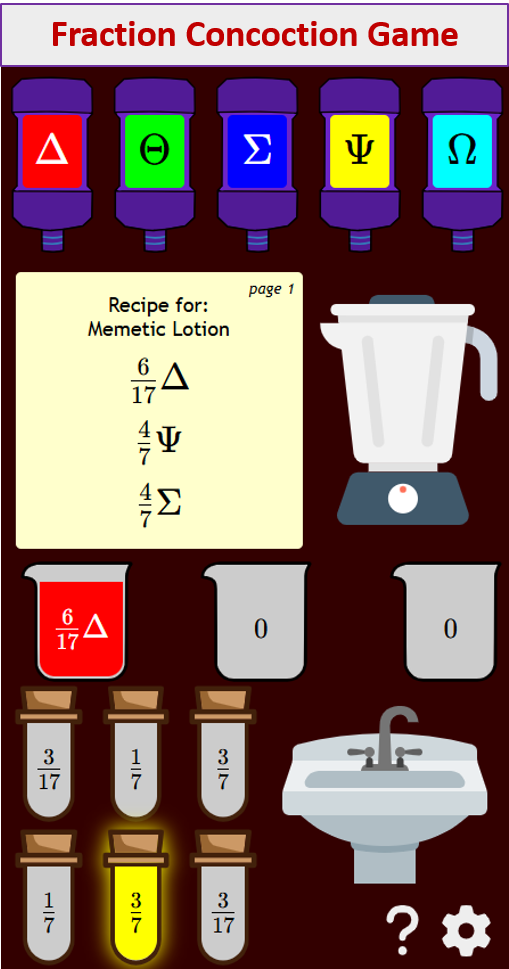
Try out our new and fun Fraction Concoction Game.
Add and subtract fractions to make exciting fraction concoctions following a recipe. There are four levels of difficulty: Easy, medium, hard and insane. Practice the basics of fraction addition and subtraction or challenge yourself with the insane level.
We welcome your feedback, comments and questions about this site or page. Please submit your feedback or enquiries via our Feedback page.


