

Experiments in Probability
In the study of probability, an experiment is a process or investigation from which results are observed or recorded.
An outcome is a possible result of an experiment.
A sample space is the set of all possible outcomes in the experiment. It is usually denoted by the letter S . Sample space can be written using the set notation, { }.
Experiment 1 : Tossing a coin
Possible outcomes are head or tail.
Sample space, S = {head, tail}.
Experiment 2: Tossing a die
Possible outcomes are the numbers 1, 2, 3, 4, 5, and 6
Sample space, S = {1, 2, 3, 4, 5, 6}.
Experiment 3: Picking a card
In an experiment, a card is picked from a stack of six cards, which spell the word PASCAL.
Possible outcomes are P, A 1, S, C, A 2 and L.
Sample space, S = {P, A 1, S, C, A 2 L}. There are 2 cards with the letter ‘A’
Experiment 4 : Picking 2 marbles, one at a time, from a bag that contains many blue and red marbles.
Possible outcomes are: (Blue, Blue), (Blue, Red), (Red, Blue) and (Red, Red).
Sample space, S = {(B,B), (B,R), (R,B), (R,R)}.
Lesson on Finding Probability and Sample Space
Check out our most popular games!
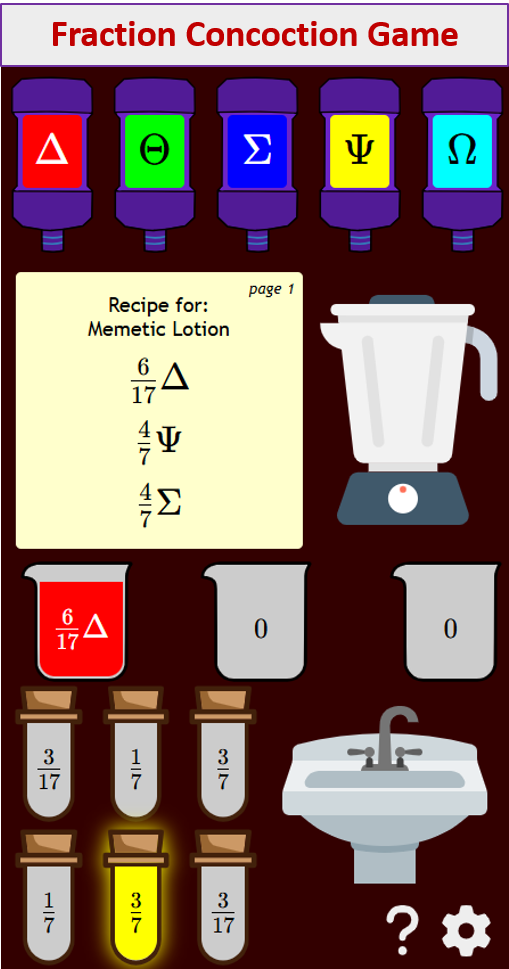
Fraction Concoction Game:
Master fractions in the lab: mix, add, and subtract beakers to create the perfect concoction!
Fact Family Game:
Complete fact families and master the link between addition & subtraction and multiplication & division.

Number Bond Garden:
Clear the board by matching number pairs that sum to ten in this garden-themed mental math puzzle.

Online Addition Subtraction Game:
Practice your addition and subtraction skills to help the penguin find its mummy.

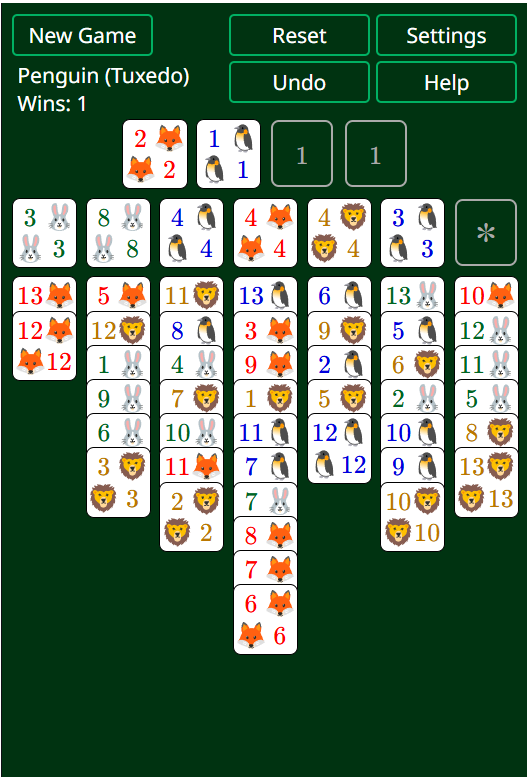
Penguin Solitaire
Penguin Solitaire is a fun game that aims to move all cards to the foundations to build four full sequences. There are two versions here: Penguin (Tuxedo) and Penguin (Original).
We welcome your feedback, comments and questions about this site or page. Please submit your feedback or enquiries via our Feedback page.


