Verbs: Past Tense
Related Pages
Simple Past Tense For Irregular Verbs
IELTS, TOEFL And English As A Second Language
More Lessons On English Grammar
English for Kids
In these lessons, we will learn
- the Simple Past Tense
- how to form simple past tense for regular verbs
- how to recognize and understand the simple past tense
- how to pronounce and spell the past tense of regular verbs
The simple past tense is used to describe actions or events that were completed in the past. It is often formed by adding -ed to the base form of regular verbs. Irregular verbs, however, have unique past tense forms that must be memorized.
Learn more about Irregular Verbs
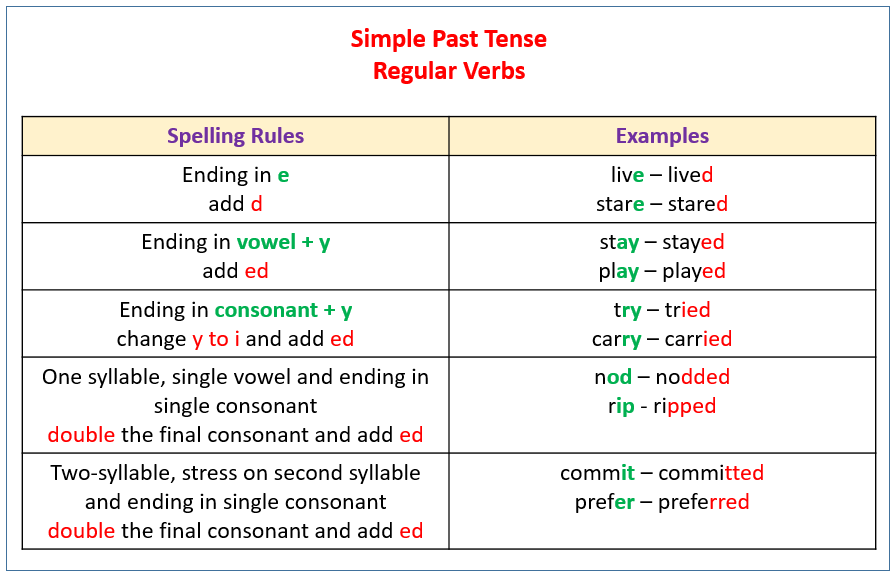
The following table gives some of the rules for the past tense of regular verbs. Scroll down the page for more examples.
The Simple Past Tense
Verbs have different forms, called tenses. The tense of a verb tells us when the action happens.
We use the simple past tense to talk about things that happened in the past.
Examples:
The children visited the zoo last week.
The plane landed a few minutes ago.
Jerry dried his clothes in the sun.
Regular Verbs
For most verbs, the simple past tense is created by adding a d, ed or ied at the end of the word. These are called regular verbs. There are also irregular verbs which do not follow this pattern.
The following are some of the rules for regular verbs.
For verbs ending in e add a d.
Example:
| Present Tense | Past Tense |
|---|---|
| live | lived |
| love | loved |
| date | dated |
| agree | agreed |
| die | died |
| queue | queued |
| stare | stared |
| invite | invited |
For verbs ending in (consonant)+y, change y, to i, and add ed.
| Present Tense | Past Tense |
|---|---|
| try | tried |
| carry | carried |
| dirty | dirtied |
| hurry | hurried |
| spy | spied |
| cry | cried |
| study | studied |
For verbs that are one syllable and ending in (vowel)+(consonant) (but not y or w, double the consonant and then add ed.
| Present Tense | Past Tense |
|---|---|
| fan | fanned |
| grab | grabbed |
| nod | nodded |
| pat | patted |
| pin | pinned |
| rip | ripped |
| slam | slammed |
For other verbs, just add ed.
| Present Tense | Past Tense |
|---|---|
| cross | crossed |
| jump | jumped |
| lift | lifted |
| allow | allowed |
| open | opened |
| paint | painted |
| walk | walked |
| laugh | laughed |
There are many verbs that do not follow these rules. They are called irregular verbs.
Recognizing And Understanding The Simple Past Tense
The Simple Past Tense - Basic English Grammar
Recognizing and understanding the simple past tense. (Part one)
Recognizing and understanding the simple past tense. (Part two)
Recognizing and understanding the simple past tense. (Part three)<br? This segment gives additional practice in forming the simple past tense with regular and irregular verbs. Wh- and YES-NO questions are also presented and practiced.
Recognizing and understanding the simple past tense. (Part four)
This segment gives additional practice in forming questions and presents rules for pronouncing the “-ed”
ending in regular verbs.
Pronouncing And Spelling Past Tense Verbs
This video explains how to pronounce past tense regular verbs in English.
How to pronounce the past tense of regular verbs?
The “ed” ending might be a “d” or a “t,” depending on what comes before it.
How to pronounce regular verbs in the past tense in English?
ESL students can practice listening to and pronouncing the regular verbs in past tense (-ed endings).
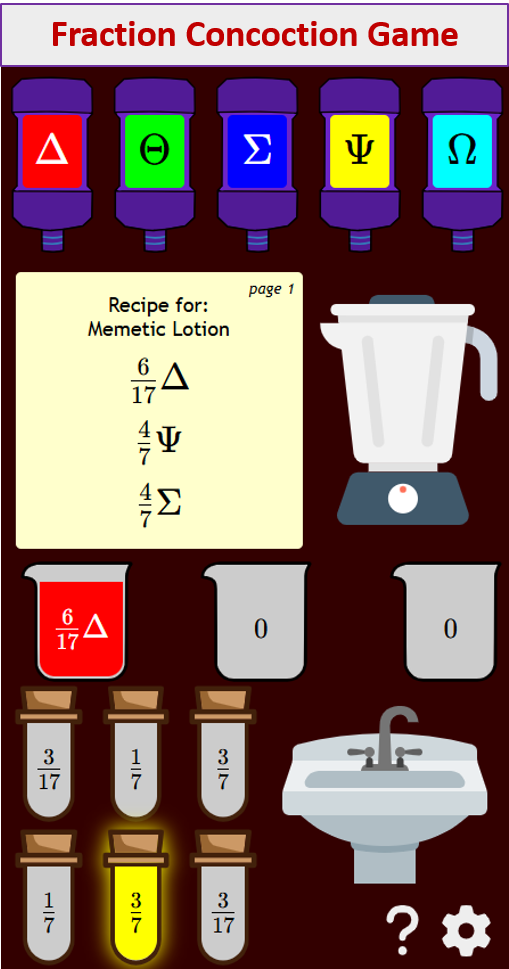
Try out our new and fun Fraction Concoction Game.
Add and subtract fractions to make exciting fraction concoctions following a recipe. There are four levels of difficulty: Easy, medium, hard and insane. Practice the basics of fraction addition and subtraction or challenge yourself with the insane level.
We welcome your feedback, comments and questions about this site or page. Please submit your feedback or enquiries via our Feedback page.