Frequency Table For Grouped Data
Related Pages
Frequency Tables
Mean And Mode From The Frequency Table
Median From The Frequency Table
More Statistics Lessons
In these lessons, we will learn:
- discrete and grouped data
- how to create a frequency table for interval data or grouped data Click here
- how to obtain the mean, median, mode and range from a grouped frequency table Click here
- how to estimate the median and quartiles and percentiles from a grouped frequency table Click here
Discrete And Grouped Data
Data may be discrete or continuous. Discrete data can only take particular values (usually whole numbers) such as the number of children per family. Continuous data can take any value in a given range, for example mass, height, age and temperature.
Sometimes, the collected data can be too numerous to be meaningful. We need to organize data in some logical manner in order to make sense out of them. We could group data into classes. Each class is known as a class interval.
Example:
The data below shows the mass of 40 students in a class. The measurement is to the nearest kg.
| 55 | 70 | 57 | 73 | 55 | 59 | 64 | 72 |
| 60 | 48 | 58 | 54 | 69 | 51 | 63 | 78 |
| 75 | 64 | 65 | 57 | 71 | 78 | 76 | 62 |
| 49 | 66 | 62 | 76 | 61 | 63 | 63 | 76 |
| 52 | 76 | 71 | 61 | 53 | 56 | 67 | 71 |
Construct a frequency table for the data using an appropriate scale.
Solution:
Step 1: Find the range.
The range of a set of numbers is the difference between
the least number and the greatest number in the set.
In this example, the greatest mass is 78 and the smallest mass is 48. The range of the masses is then 78 – 48 = 30. The scale of the frequency table must contain the range of masses.
Step 2: Find the intervals
The intervals separate the scale into equal parts.
We could choose intervals of 5. We then begin the scale with 45 and end with 79
Step 3: Draw the frequency table using the selected scale and intervals.
| Mass (kg) | Frequency |
|---|---|
| 45 – 49 | 2 |
| 50 – 54 | 4 |
| 55 – 59 | 7 |
| 60 – 64 | 10 |
| 65 – 69 | 4 |
| 70 – 74 | 6 |
| 75 – 79 | 7 |
Defining Class Intervals For A Frequency Table Or Histogram
Example:
Suppose that we have collected weights from 100 male subjects as part of a nutrition study.
For our weight data, we have values ranging from a low of 121 pounds to a high of 263 pounds,
giving a total span of 263 - 121 = 142.
Determine reasonable class intervals for a frequency table.
Creating Simple And Grouped Frequency Tables
An overview of the ranked distribution, the simple frequency distribution, and the Grouped Frequency Distribution - their benefits and how to create them.
Mean, Median, Mode And Range From A Grouped Frequency Table
Getting averages from grouped frequency tables, including the range, mean, median and mode.
How To Find The Mean, Mode And Median From A Frequency Table For Both Discrete And Grouped Data?
Median And Quartiles And Percentiles From A Grouped Frequency Table
Without drawing a graph, estimate the median and quartiles and percentiles from a grouped frequency table.
Creating A Grouped Frequency Table To Find Mean And Plot A Cumulative Frequency Curve
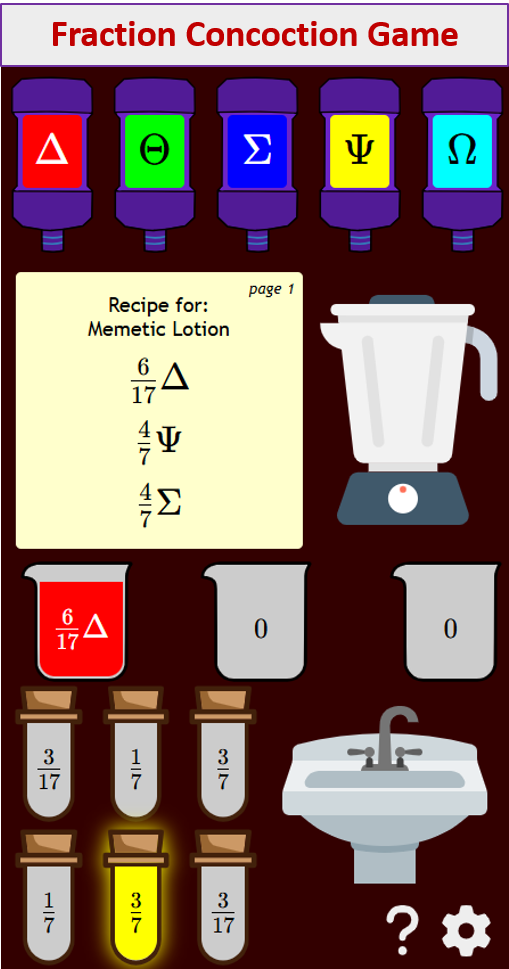
Try out our new and fun Fraction Concoction Game.
Add and subtract fractions to make exciting fraction concoctions following a recipe. There are four levels of difficulty: Easy, medium, hard and insane. Practice the basics of fraction addition and subtraction or challenge yourself with the insane level.
We welcome your feedback, comments and questions about this site or page. Please submit your feedback or enquiries via our Feedback page.