Solve and Graph Rational Equations
Related Topics:
More Lessons for Intermediate Algebra
Math Worksheets
A series of free, online Intermediate Algebra Lessons or Algebra II lessons.
Examples, solutions, videos, worksheets, and activities to help Algebra students.
In this lesson, we will learn
- how to solve rational equations
- how to graph rational functions
- how to solve a rational equation for a parameter or variable
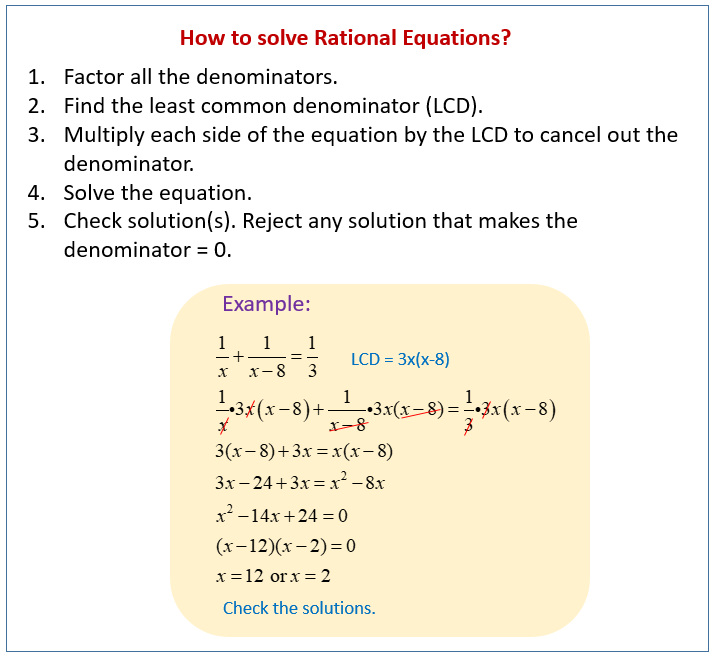
The following figure shows how to solve rational equations. Scroll down the page for more examples and solutions.
Solving Rational Equations
Solving rational equations is substantially easier with like denominators. When solving rational equations, first multiply every term in the equation by the common denominator so the equation is “cleared” of fractions. Next, use an appropriate technique for solving for the variable.
This video explains how to solve rational equations.
How to solve rational equations.
Examples of how to solve rational equations.
Examples of how to solve rational equations.
Graphing Rational Functions
The graph of a basic rational function (1/x) is easy to do by plotting key points. When graphing rational functions, the functions are asymptotic to either the x-axis and y-axis or to certain lines if there are shifts in the graphs. More complex graphs of rational functions include functions with graph shifts.
Graphing a Rational Function - Example 1
Graphing a Rational Function - Example 2
Graphing a Rational Function - Example 3
Graphing a Rational Function - Example 4
Solving a Rational Equation for a parameter
Solving rational equations is substantially easier with like denominators. When solving equations with rational numbers, we first multiply every term in the equation by the common denominator so the equation is “cleared” of fractions. Next, we use an appropriate technique for solving for the variable, such as isolating and simplifying.
How to solve a simple rational equation for a parameter.
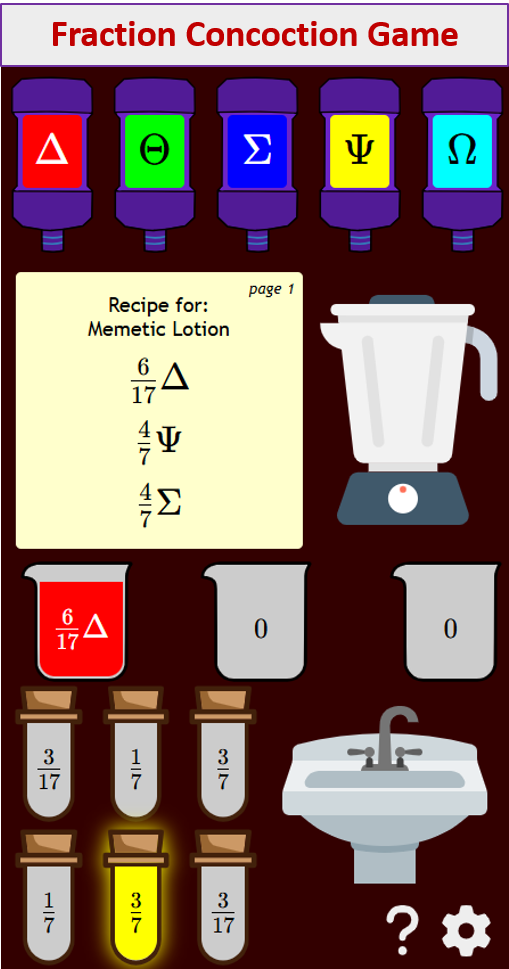
Try out our new and fun Fraction Concoction Game.
Add and subtract fractions to make exciting fraction concoctions following a recipe. There are four levels of difficulty: Easy, medium, hard and insane. Practice the basics of fraction addition and subtraction or challenge yourself with the insane level.
We welcome your feedback, comments and questions about this site or page. Please submit your feedback or enquiries via our Feedback page.