Animal Facts - Jellyfish
On this page we will look at the fascinating Jellyfish. We also include images and videos.
If you have any interesting or funny facts about animals or would like to find out more information about a particular animal, please fill up the Feedback form and we will be happy to add it to our list of animal facts.
Does a jellyfish have a brain?
Jellyfish do not have brains. They are fascinating creatures with extremely simple bodies. They are invertebrates, which means that they don’t have a backbone (or in their case, any sort of skeleton). Instead of a brain or a central nervous system, they have an elementary nervous system, or nerve net, that is scattered throughout their bodies. Their nerve net can detect light, scent, and other types of stimulus and coordinate appropriate responses (“move closer,” “move away,” and so forth). They don’t have a heart or a circulatory system. Instead, they have a mouth, a stomach, tentacles, and a body full of meloglea, which is the thick jellylike substance for which they’re named.
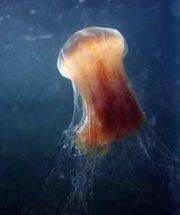
The body of an adult jellyfish consists of a bell shape producing jelly and enclosing its internal structure, from which tentacles are suspended. Each tentacle is covered with cells called cnidocytes that can sting and kill other animals. Most jellyfish use these cells to secure prey or for defense. There are some jellyfish that do not have tentacles at all.
They feed on small fish and zooplankton that become caught in their tentacles. Most jellyfish are passive drifters and slow swimmers, as their shape is not hydrodynamic. Instead, they move so as to create a current forcing the prey within reach of their tentacles. They do this by rhythmically opening and closing their bell-like body.
This video shows different species of jellyfish in the ocean.
World’s Largest Jellyfish
The world’s largest jellyfish may look intimidating, but it must be aware of it’s surroundings or it will be eaten alive.
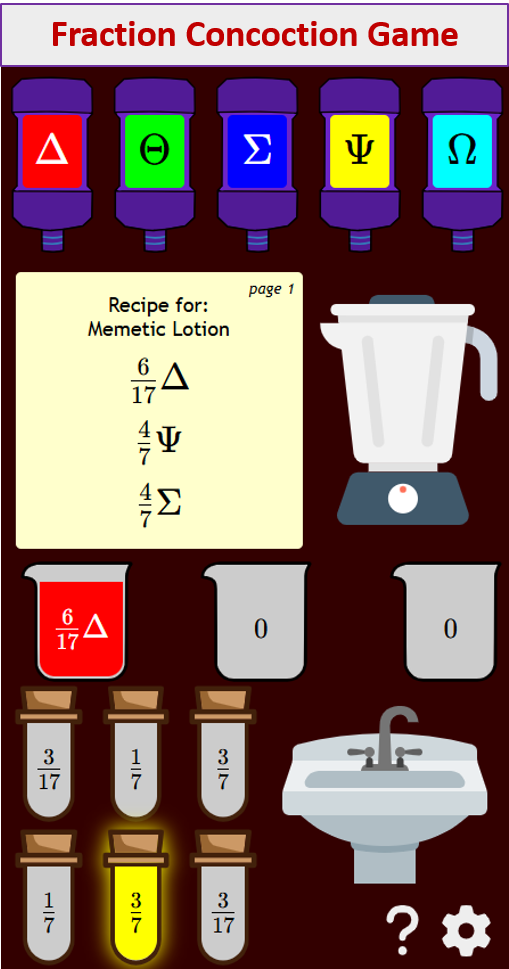
Try out our new and fun Fraction Concoction Game.
Add and subtract fractions to make exciting fraction concoctions following a recipe. There are four levels of difficulty: Easy, medium, hard and insane. Practice the basics of fraction addition and subtraction or challenge yourself with the insane level.
We welcome your feedback, comments and questions about this site or page. Please submit your feedback or enquiries via our Feedback page.