Animal Facts - Humming Birds
In this page, we will look at the amazing Humming Birds.
If you have any interesting or funny facts about animals or would like to find out more information about a particular animal, please fill up the Feedback form and we will be happy to add it to our list of animal facts.
What bird can fly backwards?
Besides being able to hover in place, the hummingbird can also fly backwards. It is the only bird able to do so.
Hummingbirds are small birds with long, thin bills and extendible, grooved tongues. These features allow it to feed on nectar deep within flowers. Hummingbirds will also prey on insects for extra nutrients. The Bee Hummingbird is the smallest bird in the world, weighing 1.8 g (0.06 oz) and measuring about 5 cm (2 in). A typical North American hummingbird, such as the Rufous Hummingbird, weighs approximately 3 g (0.106 ounces) and has a length of 10–12 cm (3.5–4 inches). The largest hummingbird is the Giant Hummingbird, which can weigh as much as 24 g (0.85 oz) and measuring 21.5 cm (8.5 in).
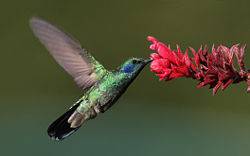
A hummingbird feeding from a flower.
A hummingbird’s heart can beat over a thousand times a minute while the bird is in flight. To provide enough energy for the rapid beating of its wings, a hummingbird must eat up to five times their own body weight in nectar each day. At any given moment, a hummingbird is only hours away from starving. Fortunately, hummingbirds are able to conserve energy when they are not looking for food by entering a hibernation-like state called torpor.
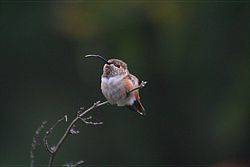
A hummingbird with its tongue sticking out.
Below is a video of a hummingbird eating from an artificial feeder (and flying backwards).
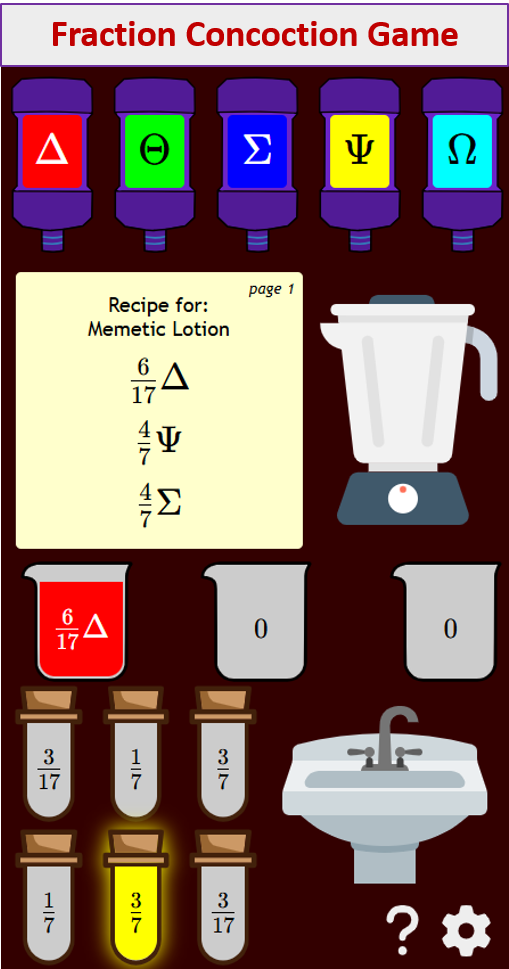
Try out our new and fun Fraction Concoction Game.
Add and subtract fractions to make exciting fraction concoctions following a recipe. There are four levels of difficulty: Easy, medium, hard and insane. Practice the basics of fraction addition and subtraction or challenge yourself with the insane level.
We welcome your feedback, comments and questions about this site or page. Please submit your feedback or enquiries via our Feedback page.