Animal Facts - Geckos
In this page we will look at the Geckos.
If you have any interesting or funny facts about animals or would like to find out more information about a particular animal, please fill up the Feedback form and we will be happy to add it to our list of animal facts.
How can a gecko walk upside down?
Geckos can race up a polished glass at a meter per second and support their body weight from a wall with a single toe. This is due to the millions of tiny hairs found on their toes. These tiny hairs form weak intermolecular attractive forces, called van der Waals forces, which allow the geckos’ feet to stick to almost any surface. If a gecko used all of its tiny hairs at a time, it could support up to 280 pounds.
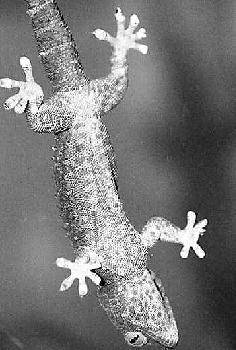
Most geckos have no eyelids and instead have a transparent membrane which they lick to clean. Many species will, in defense, expel a foul-smelling material and feces onto their aggressors.
Geckos come in various colors and patterns. Some are subtly patterned, and somewhat rubbery looking, while others can be brightly colored. Some species can change color to blend in with their surroundings or with temperature differences. In some species, the females are capable of reproducing without copulating with a male. This improves the gecko’s ability to spread to new islands. Some can change their sexes in different seasons.
The following video explains more about the geckos’ toe hairs
Try out our new and fun Fraction Concoction Game.
Add and subtract fractions to make exciting fraction concoctions following a recipe. There are four levels of difficulty: Easy, medium, hard and insane. Practice the basics of fraction addition and subtraction or challenge yourself with the insane level.

We welcome your feedback, comments and questions about this site or page. Please submit your feedback or enquiries via our Feedback page.