Present Continuous Ten
In these lessons, we will learn
- how to form the Present Continuous Tense (Present Progressive Tense)
- when to use the Present Continuous Tense
- negatives in the Present Continuous Tense
- the differences between the Present Tense and Present Continuous Tense
Related Pages
Present Perfect Tense
Simple Past Tense
Past Participle
IELTS, TOEFL And English As A Second Language
More Lessons On English Grammar
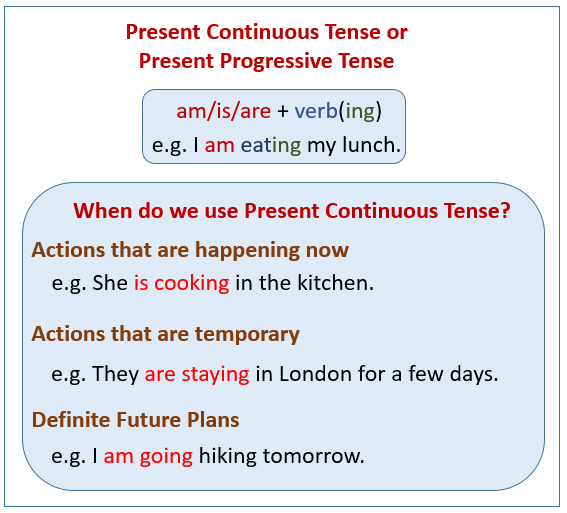
The following diagram shows examples of Present Continuous Tense and when to use Present Continuous Tense. Scroll down the page for examples and step by step solutions.
How To Form The Present Continuous Tense?
Verbs have different forms, called tenses. The tense of a verb tells us when the action happens. We use the present continuous tense to describe actions that are happening now, around now and personal future plans. The present continuous tense is also called the present progressive tense.
We can form the present continuous tense in the following way:
am/is/are + verb + ing = present continuous tense.
verb + ing = present participle
Examples
I am learning how to swim.
She is reading a book.
The crow is building a nest.
When To Use Present Continuous Tense?
We can use the present continuous tense in the following situations:
Situation 1: Actions that are happening now.
Examples
Marcus is making a puppet.
We are singing too loudly.
They are fishing in the stream.
Situation 2: Actions that are happening around now or are temporary.
Examples
She is staying in New York.
We are working hard these days.
Situation 3: Future Plans
Examples
We are going camping tomorrow.
I am starting piano lessons soon.
We are having a barbeque this evening.
Negatives In The Present Continuous Tense
We can form the negative of the Present Continuous Tense by adding not after am/are/is.
| Positive | Negative | Contraction |
| I am singing. | I am not singing. | I’m not singing. |
| He is reading. | He is not reading. | He isn’t reading. |
| She is dancing. | She is not dancing. | She isn’t dancing. |
| You are playing. | You are not playing. | You aren’t playing. |
| They are sleeping. | They are not sleeping. | They aren’t sleeping. |
| It is raining. | It is not raining. | It isn’t raining. |
How to make basic sentences in present continuous tense?
Forms and uses of the present progressive tense or present continuous tense.
The present continuous or present progressive verb tense
The present continuous tense describes actions that are happening now and in the future
Differences Between Present Tense And Present Continuous Tense
The following videos show the differences between the Present Tense and the Present Continuous Tense.
Present Simple vs Present Continuous.
The differences between the present tense and the present continuous tense in English
Learn about the difference between the Present Simple and the Present Continuous (Progressive) in English
Try the free Mathway calculator and
problem solver below to practice various math topics. Try the given examples, or type in your own
problem and check your answer with the step-by-step explanations.
We welcome your feedback, comments and questions about this site or page. Please submit your feedback or enquiries via our Feedback page.