Simple Future Tense
In these lessons, we will learn
- when to use the future tense
- how to form the future tense
- what is the difference between “will” and “going to”
Related Pages
Present Continuous Tense
Simple Past Tense
Past Participle
IELTS, TOEFL And English As A Second Language
More Lessons On English Grammar
Verbs have different forms, called tenses. The tense of a verb tells us when the action happens.
When to use the future tense?
We use the future tense when we want to talk about future actions or happenings.
Forming the Future Tense
Form 1: will + verb
Examples:
I will write to John.
It will be dark soon.
Form 2: am/is/are + going to + verb
Examples:
I am going to finish my work soon.
We are going to win.
The following diagrams show examples of Future Tense and the differences between using “Will” and “Going to”. Scroll down the page for more examples and explanations.
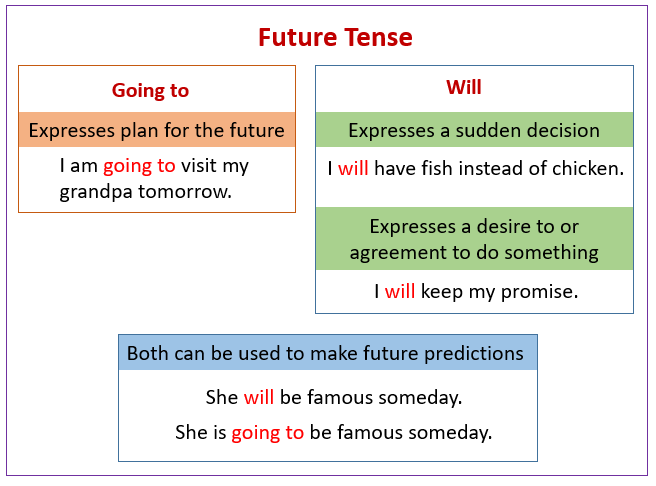
What is the difference between “will” and “going to”?
We usually use going to when the situation is planned
Example:
I am going to visit Sally.
We are going to be back for dinner.
We usually use will + verb when the situation is unplanned or in formal writing.
Examples of unplanned situations:
I will answer the phone.
I’ll get it. (I’ll is the contraction or short form for I will)
Examples of formal writing:
I will visit Sally.
We will be back for dinner.
The Future Tense: Will vs. Going To
There are two ways to talk about the future in English: will/won’t and going to.
Use “going to” for plans and arrangements
Use “will/won’t” for promises
Use “will” for offers
Use “will” for decisions made in the moment
Use “will/won’t” or “going to” for predictions or statements about the future
How to make the future tense using “will” and the simple form of the verb?
Pronunciation practice is important with the contractions.
How to make the future tense with “going to”?
How the future tense is used in conversation?
Are you confused about if you should use ‘will’ or ‘going to’ to talk about the future?
Watch this grammar lesson.
The Future Tense
Try the free Mathway calculator and
problem solver below to practice various math topics. Try the given examples, or type in your own
problem and check your answer with the step-by-step explanations.
We welcome your feedback, comments and questions about this site or page. Please submit your feedback or enquiries via our Feedback page.